
Top 9 Best Northern Lights Places in February 2026 (Overview)
Here are the 9 standout spots for chasing the Northern Lights this February, ranked by their killer combo of auroral odds, clear-sky stats, and epic scenery during Solar Cycle 25’s hot phase.
- Tromsø, Norway: Dead-center under the auroral oval at 69.6°N—85–90% chance of overhead aurora on clear nights, 95%+ success over 5–7 nights.
- Abisko, Swedish Lapland: The famous “blue hole” microclimate delivers clearer skies than coastal rivals, perfect for faint aurora details in total darkness.
- Rovaniemi, Finnish Lapland: Super accessible with 150–200 aurora nights yearly, blending Santa vibes and quick drives to dark-sky gold.
- Levi/Inari, Finnish Lapland: Darker and remoter than Rovaniemi for sharper photos, with skiing and snowmobiling by day.
- Kakslauttanen, Finnish Lapland: Glass igloos let you watch from bed—ideal for freezing nights when KP 3–4 brings overhead shows.
- Reykjavík & Rural Iceland: Tour chases from the capital hit dark spots; rural beaches and glaciers make KP 3+ storms photogenic magic.
- Yellowknife, Canada: “Aurora Capital” boasts 240 active nights/year, 95% sighting odds over 3 clear nights despite the −40°C chill.
- Fairbanks, Alaska: 200 clear-sky days/year under the oval, easy lodges, and hot springs for 3–5 night high-probability wins.
- Alta/Lofoten/Svalbard, Norway: Alta’s dry stability, Lofoten’s jagged drama, Svalbard’s polar night edge—all amplified by 2026 storms.
Why are these the best Northern Lights places in February 2026?(Detailed Guide)
February 2026 sits in the active, post‑peak phase of Solar Cycle 25, so high‑latitude “aurora capitals” like Tromsø, Abisko, Lapland, Iceland, Yellowknife, and Fairbanks give you an unusually strong blend of powerful solar activity, long winter nights, and proven viewing statistics.
Northern Lights in February 2026: why this month is a sweet spot
Solar Cycle 25 reached its maximum in late 2024, but sunspot numbers and geomagnetic storms remain elevated into the 2025–26 and 2026–27 aurora seasons, keeping aurora-producing space weather stronger than in quiet years. Even in this post‑maximum phase, scientists expect frequent G1–G2 geomagnetic storms that can push auroras farther south and make displays brighter and more dynamic across the whole auroral oval.
In February at high latitudes, you typically get around 14–18 hours of darkness, which gives you multiple nightly “attempts” (early evening, late night, pre‑dawn) even if some hours are cloudy. A practical planning rule is that if you give yourself 5–7 nights in a strong aurora zone and can drive or join tours to dodge local clouds, your odds of at least one good display climb above roughly 90% in this solar‑active window.
Learn More: When and Where to See the Northern Lights in Canada in 2026? Best Time, Top Spots and TipsTop 9 Best Places to See the Northern Lights in February 2026
1. Tromsø Northern Lights: Why Tromsø Is One of the Most Reliable Aurora Bases in 2026
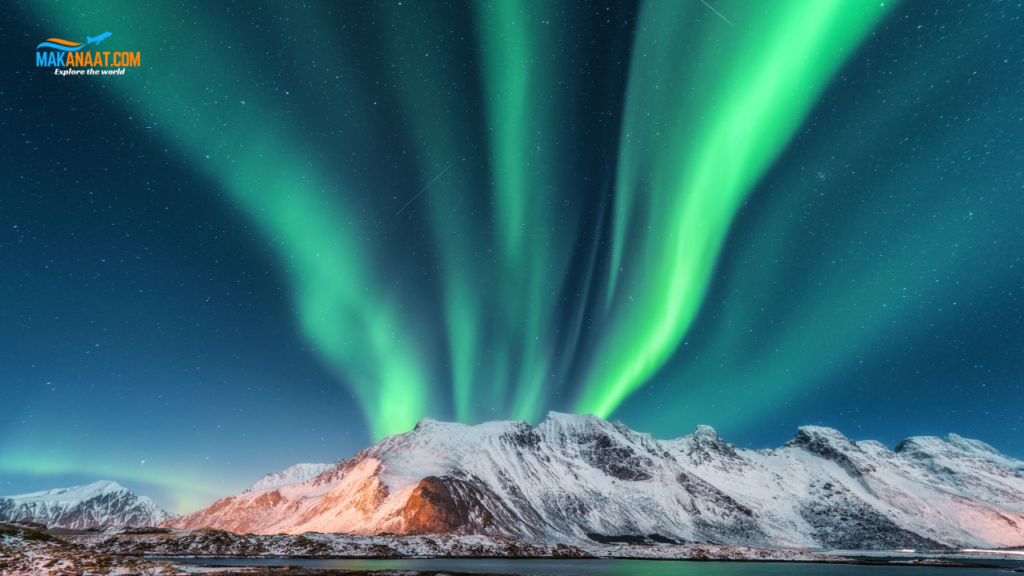
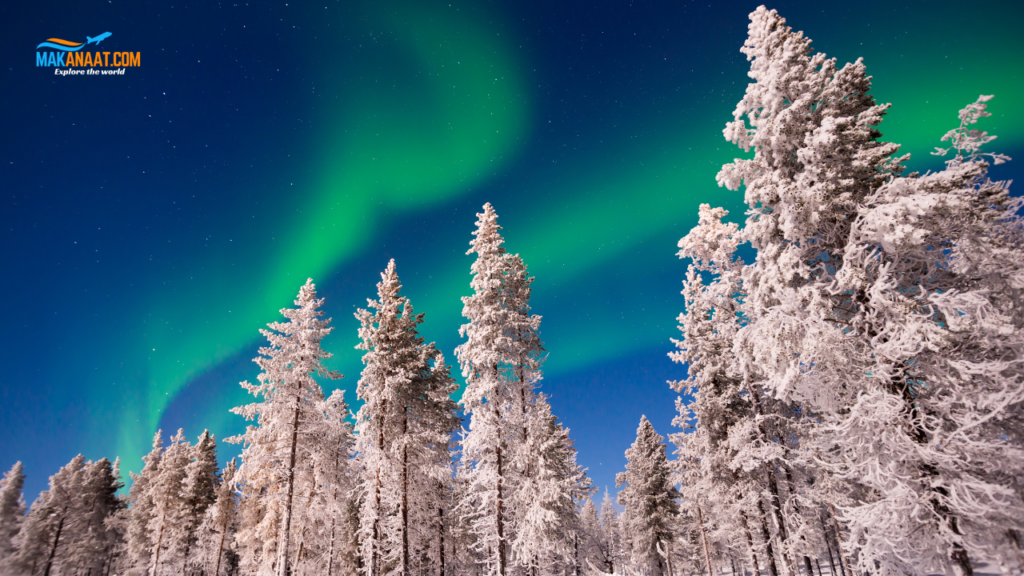
Tromsø sits at about 69.6°N, directly under the core of the auroral oval, which means aurora can be visible even at very low geomagnetic activity (KP 1–2). Forecast data indicate that on clear winter nights, Tromsø sees aurora overhead roughly 85–90% of the time from September to April, and a 5–7‑night stay pushes your chance of at least one sighting above 95%.
February falls in Tromsø’s prime aurora season, combining long nights with frequent clear spells between Atlantic systems, and in a solar‑maximum era, even “average” KP 3–4 nights often produce bright arcs, curtains, and coronas. On KP 5+ storm nights, those same fjords and mountain backdrops turn into full‑sky shows that can last hours, which is why guided “aurora chases” from Tromsø report success rates above 90% across the season.
Beyond the lights, Tromsø layers in fjord cruises, Sami cultural visits, dog‑sledding, whale watching earlier in winter, and the Fjellheisen cable‑car viewpoints, so your trip feels full even if one or two nights are lost to clouds. This mix of high statistical reliability plus varied daytime activities makes Tromsø one of the most efficient and enjoyable Northern Lights bases for February 2026.
2. Abisko Northern Lights: How the Abisko “Blue Hole” Increases Clear-Sky Aurora Chances
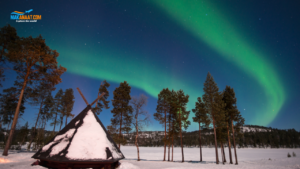
Abisko, in Swedish Lapland, is famous among aurora photographers because its semi‑arid, interior climate produces fewer clouds than coastal Norway at the same latitude. Local operator data and regional studies show that Abisko enjoys significantly more clear‑sky hours in winter than many nearby areas, creating the so‑called “blue hole” over Abisko National Park. Since clouds—not solar activity—are usually the main limiting factor, this clear‑sky advantage translates directly into higher real‑world aurora success rates for visitors.
You also get very low light pollution thanks to the tiny settlement and protected park status, which makes faint arcs and subtle color changes easier to pick up on camera before a full substorm breaks. Abisko’s Aurora Sky Station adds a purpose‑built, data‑driven experience with a chairlift up to a mountain station, guided science talks, and on‑site photographers, effectively turning a 3–5‑night stay during Solar Cycle 25’s extended active phase into a high‑efficiency, high‑probability aurora trip.
3. Finnish Lapland Northern Lights: Why Finnish Lapland Performs So Well in February 2026
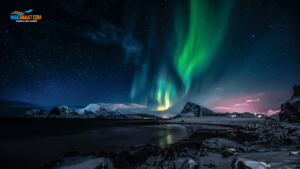
Finnish Lapland lies squarely in the auroral zone (roughly 66–69°N), and regional tourism boards commonly highlight that the Northern Lights can be visible around 150–200 nights per year in the broader Lapland region, depending on cloud cover and exact location. In the 2025–26 and 2026–27 winters, operators are marketing Lapland as a “best in a decade” aurora window because Solar Cycle 25’s double‑peak pattern is expected to keep activity elevated through 2026.
Rovaniemi offers the most accessible base, with an airport and rail links plus family‑friendly, Santa‑themed attractions, while darker hubs like Levi and Inari trade city convenience for lower light pollution and better contrast in your photos. Kakslauttanen’s glass igloos and cabins are specifically designed for sky‑watching from bed, which matters on nights when temperatures plunge well below freezing but geomagnetic activity remains moderate; in this solar phase, even KP 3–4 nights can generate overhead auroras several times per week in February.
4. Iceland Northern Lights: Reykjavík vs Rural Iceland for February 2026 Aurora Viewing
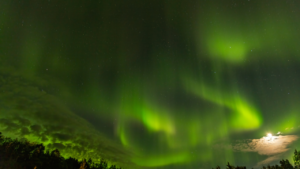
Iceland straddles about 64–66°N, comfortably inside the auroral zone, and February combines long nights with frequent auroral activity—though Atlantic weather systems mean cloud cover is more variable than in interior continental climates. Reykjavík works well if you value easy logistics and nightlife, as tour operators can drive 30–60 minutes out of the city each night to chase pockets of clearer, darker sky.
If your priority is dark skies and dramatic landscapes, rural areas such as the Snæfellsnes Peninsula, the Westfjords, or the South Coast offer fewer lights and wide horizons over black‑sand beaches, glaciers, and waterfalls. Tour and operator data show that many winter visitors on flexible 3–4‑night trips still manage at least one aurora sighting, and February 2026’s elevated geomagnetic environment should increase the odds that this “one good night” includes strong, photogenic KP 3–4 displays when clouds part.
5. Yellowknife Northern Lights: Why Yellowknife Is Known as the “Aurora Capital of the World.”
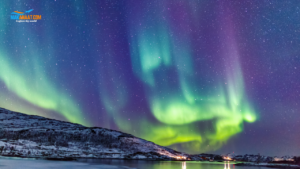
Yellowknife, in Canada’s Northwest Territories, sits directly under the auroral oval at about 62.5°N, with flat horizons and a dry subarctic climate that favors clear winter skies. Territorial statistics highlight that parts of the Northwest Territories, including Yellowknife, can experience active Northern Lights on up to 240 nights per year, making it one of the most reliable aurora destinations on Earth.
Local tourism data and tour operators often note that visitors who spend three consecutive clear nights in Yellowknife have around a 95% chance of seeing aurora at least once, thanks to both its latitude and the sheer number of active nights. The trade‑off is climate: mid‑winter temperatures frequently drop to around −30°C to −40°C, but that same cold, dry air suppresses cloud formation and dramatically improves visibility, which is a powerful advantage during the 2025–26 post‑maximum aurora seasons.
6. Fairbanks Northern Lights: Why Fairbanks Offers High Success Rates With Easy Logistics
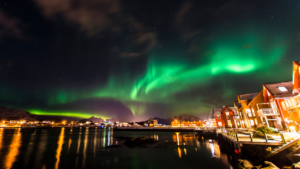
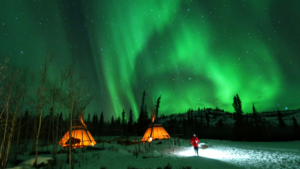
Fairbanks, Alaska (about 64.8°N), sits comfortably under the auroral oval and doesn’t need major geomagnetic storms to deliver impressive displays. University and tourism sources often point out that Fairbanks enjoys around 200 days per year with at least partly clear skies, which, combined with its latitude, creates very strong odds of seeing aurora over a 3–5‑night stay in peak season.
Aurora season in Fairbanks runs roughly from late August to April, but October through March—February included—offers the best combination of long nights, high activity, and reasonably frequent clear weather. With road access, multiple aurora lodges, hot springs, ice‑sculpture events, and photography‑friendly tours, Fairbanks gives you a high statistical chance of success, plus easy trip planning, and Solar Cycle 25’s lingering strength means more frequent vivid corona and multicolored curtain displays than in quieter years.
7 -9. Other Norway Northern Lights spots: Alta, Lofoten Islands, and Svalbard in an Active Solar Year
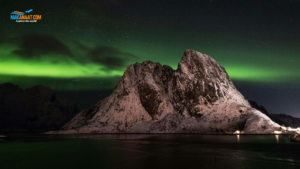
Norway’s other aurora destinations become even more interesting when solar activity is high, because intense storms can create multi‑hour, full‑sky displays over spectacular landscapes. Alta, often branded the “City of the Northern Lights,” has a long history of aurora research and relatively stable, drier winter weather than the exposed coast, which improves its clear‑sky statistics for February trips.
The Lofoten Islands, at roughly 68°N, offer some of the most photogenic aurora compositions on Earth—sharp peaks, fjords, and fishing villages—but you must be comfortable with highly changeable coastal weather. Svalbard, far north of the Arctic Circle, allows aurora viewing even in daytime during parts of the polar night, yet its extreme cold, remoteness, and limited infrastructure make it better suited to experienced winter travelers and guided expeditions; in 2026’s active solar environment, these regions can see particularly intense multi‑hour shows when geomagnetic storms hit.
How to maximize your Northern Lights chances in February 2026
Northern Lights planning: how long should you stay?
Data from major aurora hubs such as Tromsø, Yellowknife, and Fairbanks suggest that staying at least 3–5 nights in a good aurora zone typically pushes your chance of at least one aurora night into the 80–90%+ range, assuming you can move around locally to find clearer skies. Extending to 5–7 nights during this solar‑active period increases your odds further and gives you a buffer for snowstorms, sudden warm fronts, or temporary cloud cover.
Northern Lights factors: latitude, light pollution, and clouds
For February 2026, you want to prioritize three core factors: high latitude, dark skies, and favorable cloud statistics. Locations under or just inside the auroral oval—roughly 65–75°N, including Tromsø, Abisko, Finnish Lapland hubs, Yellowknife, and Fairbanks—start with a much higher baseline probability that any given clear night will have aurora overhead.
Light pollution control is huge: staying just 20–40 minutes outside major towns can dramatically increase contrast and reveal faint structures that would be washed out in city glow. Interior and semi‑arid climates like Abisko, Yellowknife, and inland Alaska typically outperform coastal, storm‑prone areas in terms of clear‑sky nights, though coastal spots such as Iceland and Lofoten win on scenery when the weather cooperates.
Northern Lights timing: Moon phase and nightly window
If you can, plan your February 2026 trip around a new moon or at least avoid the brightest full‑moon nights, because dark skies make faint arcs, subtle reds, and diffuse glows far easier to see and photograph. In most high‑latitude destinations, the statistically active window runs from about 18:00–01:00, but strong geomagnetic storms can flare earlier in the afternoon or persist toward dawn, so it pays to be outside—or near a viewing window—for several hours instead of just “checking the sky” once.
By combining a high‑latitude base, the still‑elevated Solar Cycle 25 conditions, a 3–7‑night stay, and smart choices on moon phase and cloud‑dodge flexibility, you stack multiple layers of probability in your favor and turn February 2026 into one of the most promising seasons in years for ticking the Northern Lights off your bucket list.
Ready to See the Northern Lights in February 2026?
Planning an aurora trip isn’t just about choosing the right destination—it’s about timing, logistics, local expertise, and flexibility. From navigating Arctic weather to reaching dark-sky locations at the right moment, small planning mistakes can mean missed displays.
That’s where Makanaat.com makes the difference.
Makanaat.com specializes in Northern Lights travel planning, turning complex Arctic journeys into smooth, well-timed experiences. Whether you’re heading to Tromsø, Finnish Lapland, Iceland, Yellowknife, or Fairbanks, Makanaat handles the details that matter most—so you can focus on the experience.
Why Travel With Makanaat?
-
Aurora-first itineraries built around February 2026’s peak viewing conditions
-
Handpicked stays near dark-sky zones, not just tourist centers
-
Local guides & cloud-chasing strategies to maximize real viewing odds
-
Flexible planning for weather shifts, solar activity, and moon phases
-
End-to-end support, from flights and transfers to aurora tours and stays
Instead of guessing where to go each night or relying on luck, Makanaat helps you stack probability in your favor—the same way seasoned aurora chasers do.
🌌 Turn February 2026 into your Northern Lights success story.
Plan your aurora journey with confidence at makanaat.com, and let experts handle the Arctic logistics while you chase the sky.