Quick Summary: What You Need to Know
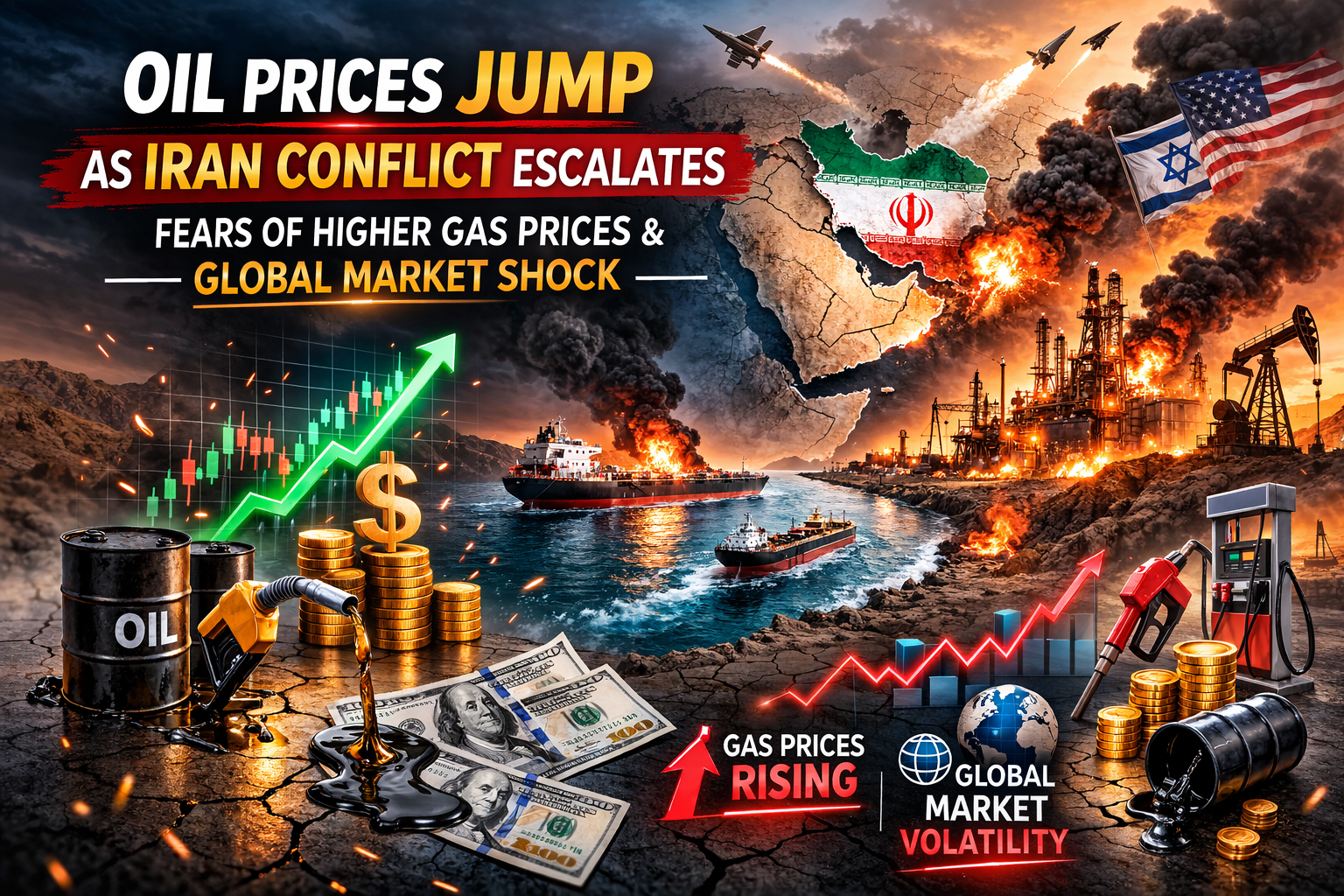
Oil prices jumped sharply after the U.S. and Israel attacked Iran, raising fears of a wider Middle East conflict.
Brent crude briefly crossed $82 a barrel, showing how quickly global energy markets react to geopolitical tension.
The biggest concern is the Strait of Hormuz, a major oil shipping route where nearly one-fifth of the world’s oil supply moves each day.
If supply disruptions continue, gas prices could rise in the coming days or weeks.
Investors are also worried about the broader impact on the economy, including inflation, stock market volatility, and higher energy costs worldwide.
Experts say the long-term effect depends on one thing above all: whether oil infrastructure and shipping routes remain operational.
Why Oil Prices Are Rising — And Why the World Is Watching Closely
Oil markets reacted immediately
Oil prices moved sharply higher after the latest military strikes involving the U.S., Israel, and Iran. As trading opened, Brent crude surged as much as 13% before pulling back, while U.S. crude also posted strong gains. That kind of move shows just how sensitive energy markets are when conflict breaks out in a region that plays such a central role in global oil and gas supply.
Even before this escalation, oil prices had already been climbing this year. But this latest jump reflects something bigger than normal market volatility. Traders are now pricing in the risk that a wider conflict could interrupt oil production, shipping, or both.
Why Iran matters so much to global energy
Iran is not just another oil-producing country. It sits in one of the most strategically important energy regions in the world. It also borders the Strait of Hormuz, a narrow but vital waterway through which a huge share of global oil and natural gas exports travel every day.
That is why the market reaction has been so intense. The concern is not only about Iran’s own oil production, but also about what could happen if conflict spreads across the wider Gulf region. If shipping traffic slows or stops, the effects could be felt far beyond the Middle East.
The Strait of Hormuz is the biggest pressure point
The Strait of Hormuz is at the center of global energy risk right now. Roughly 20% of the world’s daily oil supply passes through this route, making it one of the most important chokepoints in the global economy.
Reports suggest tanker traffic in the area slowed significantly after the attacks, and several shipping companies have already paused or diverted routes. That matters because even the fear of disruption can push oil prices higher. If the Strait faces a prolonged closure or major security threat, the oil market could face a much more serious shock.
Will gas prices go up for consumers?
Most likely, yes — but not all at once.
Oil price spikes do not usually show up at the gas station immediately. There is often a delay of several days or even a couple of weeks. Still, experts expect that if crude prices remain elevated, consumers will start to feel it soon.
A common industry estimate is that for every $10 increase in oil prices, gasoline may rise by around 20 to 30 cents per gallon. So while this may not mean an overnight surge at the pump, it does increase the likelihood of higher fuel costs in the near term.
This is bigger than just oil
The economic risk goes beyond crude. If the conflict affects shipping in the Gulf, it could also disrupt liquefied natural gas (LNG) flows. That would be especially important for Europe and other markets that rely heavily on imported gas.
Higher natural gas prices can then feed into electricity prices, industrial costs, and supply chains. In other words, when energy costs rise, the impact spreads through the economy quickly. Transportation becomes more expensive, manufacturing costs increase, and inflation pressures can return even when governments are trying to bring them down.
Stock markets are already feeling the pressure
Investors are reacting with caution. Stock futures dropped as oil rose, while gold moved higher as traders shifted toward safer assets. This kind of market behavior is typical when geopolitical risk suddenly increases.
The fear is not just the conflict itself, but what it could do to growth, inflation, and consumer spending. If energy prices stay high for long enough, it could become another headwind for businesses and households already dealing with economic uncertainty.
Could this turn into a full-blown oil shock?
That depends on what happens next.
If oil fields, refineries, export terminals, or tankers suffer major damage, prices could rise much more sharply. A prolonged disruption in the Strait of Hormuz would be especially dangerous for global markets. Some analysts have already outlined worst-case scenarios in which oil climbs above $100 per barrel.
However, if major energy infrastructure remains untouched and shipping resumes more normally, oil prices could settle back down. Several experts believe that the market is still trying to judge whether this is a temporary geopolitical spike or the start of a deeper supply crisis.
OPEC+ may help limit the damage
One factor working against a prolonged price spike is global supply. The oil market has recently been dealing with concerns about oversupply, which may help soften the impact of this latest shock.
OPEC+ has also indicated plans to increase production modestly. While that will not erase the geopolitical risk, it may help reassure markets that additional barrels can come online if needed. Still, production increases only help if the real problem is supply balance — not if shipping lanes themselves are under threat.
What happens next will decide everything
At this stage, the key issue is not just the attack itself but what follows. Markets are watching four major variables:
1. How much oil supply is disrupted
If the damage stays limited, prices may cool off. If supply losses grow, prices may keep climbing.
2. How long does the disruption lasts
Short-lived conflict usually creates temporary price spikes. Long disruptions create lasting economic pain.
3. Whether shipping through Hormuz remains open
This is arguably the most important factor. A blocked or highly restricted strait would change the entire outlook.
4. How Iran responds
Any retaliation that targets energy routes, oil infrastructure, or regional shipping would raise the stakes further.
The bottom line
Oil prices are rising because markets fear that conflict in the Middle East could disrupt one of the world’s most important energy corridors. For now, the sharp move reflects risk, uncertainty, and the possibility of a tighter supply — not yet a confirmed long-term shortage.
Still, if tensions continue, consumers could soon pay more for gasoline, businesses could face higher energy costs, and investors may remain nervous. The next few days will be crucial in determining whether this remains a short-term shock or turns into a broader global economic problem.