What is the H1B to Green Card Process? A Complete Guide
The transition from an H1B visa to a Green Card is a significant milestone in the journey to permanent residency in the United States. If you’re an H1B visa holder, this guide will provide a detailed roadmap on how to navigate the process, from initial application to becoming a U.S. permanent resident.
What Are the Key Steps in the H1B to Green Card Process?
The H1B to Green Card transition is a multi-step process, involving several key steps. Here’s a breakdown:
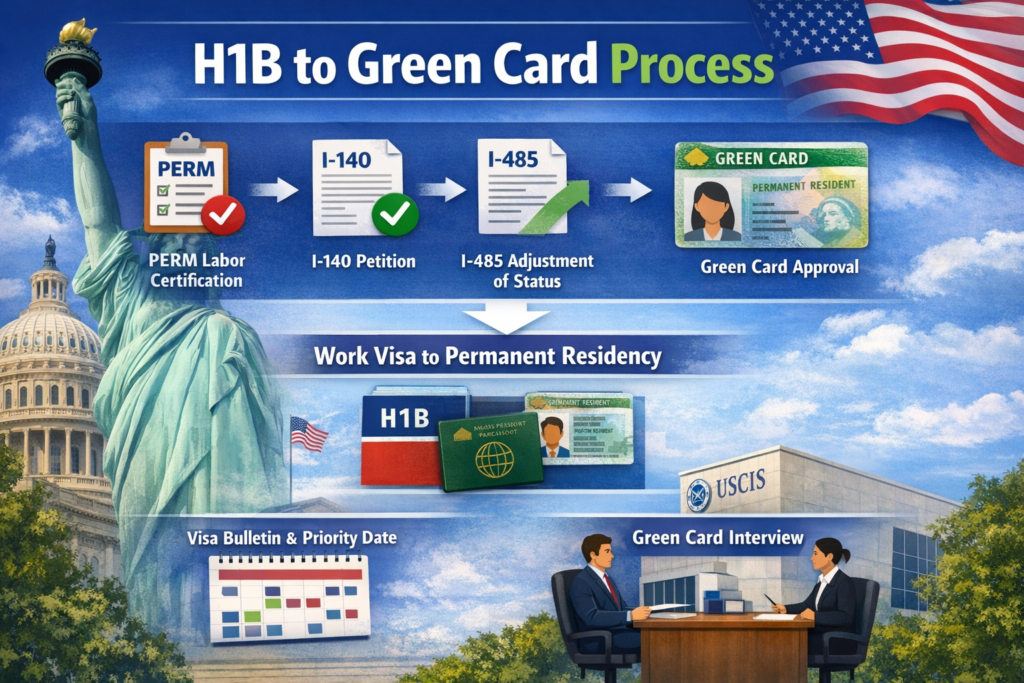
Step 1: PERM Labor Certification
The first step in the process is the PERM Labor Certification. This involves your employer proving that no qualified U.S. workers are available to fill your position. The PERM process is labor-intensive and requires your employer to conduct recruitment efforts before submitting the application to the U.S. Department of Labor (DOL).
Step 2: Filing the I-140 Petition
Once the PERM Labor Certification is approved, the next step is to file an I-140 Petition for Immigrant Worker with USCIS. This form essentially requests permission to transition from a non-immigrant (H1B) to an immigrant status (Green Card). The I-140 petition confirms that you meet the criteria for the Green Card category you are applying under, such as EB-2 or EB-3.
Step 3: Adjustment of Status (AOS) or Consular Processing
After the I-140 is approved, the final step is the Adjustment of Status (AOS). This allows you to adjust your status from an H1B visa holder to a lawful permanent resident (Green Card holder) without leaving the U.S. Alternatively, you may go through consular processing if you are outside the U.S.
How Long Does the H1B to Green Card Process Take?
The timeline for transitioning from an H1B visa to a Green Card can vary significantly based on several factors.
Typical Timeline for Green Card Approval
On average, the entire process takes anywhere from 6 months to several years, depending on the type of Green Card you are applying for and your country of origin. The process is generally faster for EB-2 applicants, while EB-3 applicants may face longer waiting times.
Factors That Impact Processing Time
Country of Origin: Applicants from countries with high demand for Green Cards, such as India or China, may experience longer wait times due to visa backlogs.
Priority Date: Your priority date is the date USCIS receives your PERM Labor Certification. This date determines your place in the queue for receiving a Green Card.
Visa Bulletin: The Visa Bulletin, updated monthly, provides the current wait times for each Green Card category based on priority dates.
What Are the Different Green Card Categories for H1B Holders?
When transitioning from an H1B visa to a Green Card, there are a few Green Card categories you may qualify for:
EB-2 vs EB-3 Green Cards
EB-2 Green Card: For professionals with advanced degrees (Master’s or higher) or individuals with exceptional abilities in fields like science, arts, or business.
EB-3 Green Card: For skilled workers with at least two years of experience or professionals with a U.S. bachelor’s degree or its foreign equivalent.
National Interest Waiver (NIW) for Green Card
In some cases, you may be eligible for the National Interest Waiver (NIW) under the EB-2 category. The NIW allows applicants to self-petition, meaning they do not need employer sponsorship, if their work is deemed to benefit the U.S. significantly.
What Are the Requirements for a Green Card from an H1B Visa?
To transition from an H1B visa to a Green Card, you must meet the eligibility requirements, which generally include:
Employment-Based Green Card Eligibility: You must have an employer who is willing to sponsor you.
Family-Based Green Card: If applicable, you may also be eligible for a family-based Green Card through a U.S. citizen or permanent resident relative.
Can You Apply for US Citizenship After Getting a Green Card?
Once you have obtained your Green Card, the next step could be applying for U.S. citizenship. However, before you apply, you need to meet several requirements, including residing in the U.S. for at least five years as a Green Card holder (or three years if married to a U.S. citizen).
Green Card to Citizenship: Timeline and Steps
The process from Green Card to citizenship is known as naturalization. Once eligible, you will need to complete the naturalization process, which includes:
Submitting the N-400 form
Passing an interview and a civics test
Taking an Oath of Allegiance
Common Mistakes to Avoid During the H1B to Green Card Process
While transitioning from an H1B visa to a Green Card, several common mistakes can cause delays:
Delays Due to Priority Date Retrogression: Retrogression occurs when the number of Green Cards available is less than the demand. This can cause long wait times for applicants from certain countries.
Failing to Track PERM Labor Certification Validity: PERM Labor Certification is only valid for a specific period. Failing to submit your I-140 petition on time can delay the entire process.
Key Takeaway
The H1B to Green Card process is a complex but achievable journey for skilled professionals seeking permanent residency in the U.S. By understanding the process, staying on top of timelines, and working closely with your employer and immigration attorney, you can increase your chances of a successful transition.